Walk-in showers in Teesside
A walk-in shower in Teesside costs £2,500 to £5,500 in 2026: low-profile tray, fixed glass screen, thermostatic valve and full tiling of the wet area. Bath-out swaps typically take two to four working days.
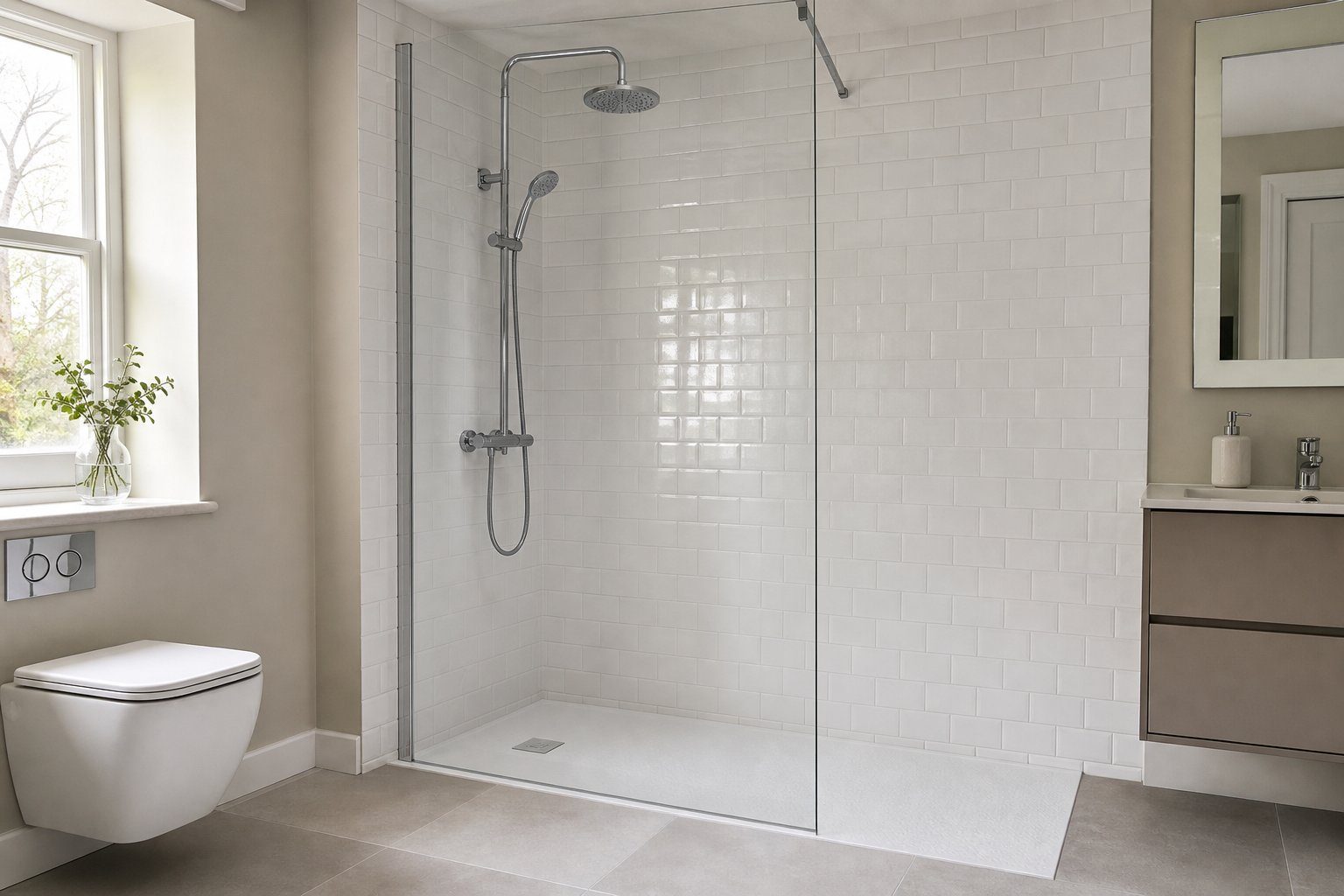
The sensible alternative to a full wet room
A walk-in shower keeps the water in one corner: a low-profile tray (25mm to 40mm), a fixed glass screen, and tiling where it matters. The rest of the room stays a normal bathroom, the floor stays untouched, and the job takes days rather than a week. For most family bathrooms it is the right answer, and honest quoting means saying so.
The bath-out swap is the classic Teesside job: the old steel bath comes out of a 1930s semi, a 1700mm walk-in tray goes in its footprint, the walls get metro or large-format tiles, and the room transforms without moving a single pipe run. Two to four working days, start to finish.
What it costs
£2,500 to £5,500 depending on tray type, screen, valve and tiling scope. Slate-effect resin trays and frameless screens sit at the top; good acrylic trays and semi-frameless screens at the other end. Compared with a full wet room at £5,500 to £11,000, the saving is real, and the wet room vs walk-in shower guide compares the two honestly.
Where a walk-in shower wins
- Family bathrooms: keeps the room conventional, keeps resale broad.
- Rental properties: a tray contains the water risk when tenants ignore grout and seals.
- Tighter budgets: most of the look and all of the practicality at half the cost.
- Tricky drainage: a raised tray sidesteps the pumped waste a wet room would need.
If accessibility is the driver, step up to a mobility wet room instead: level access with no tray lip at all.